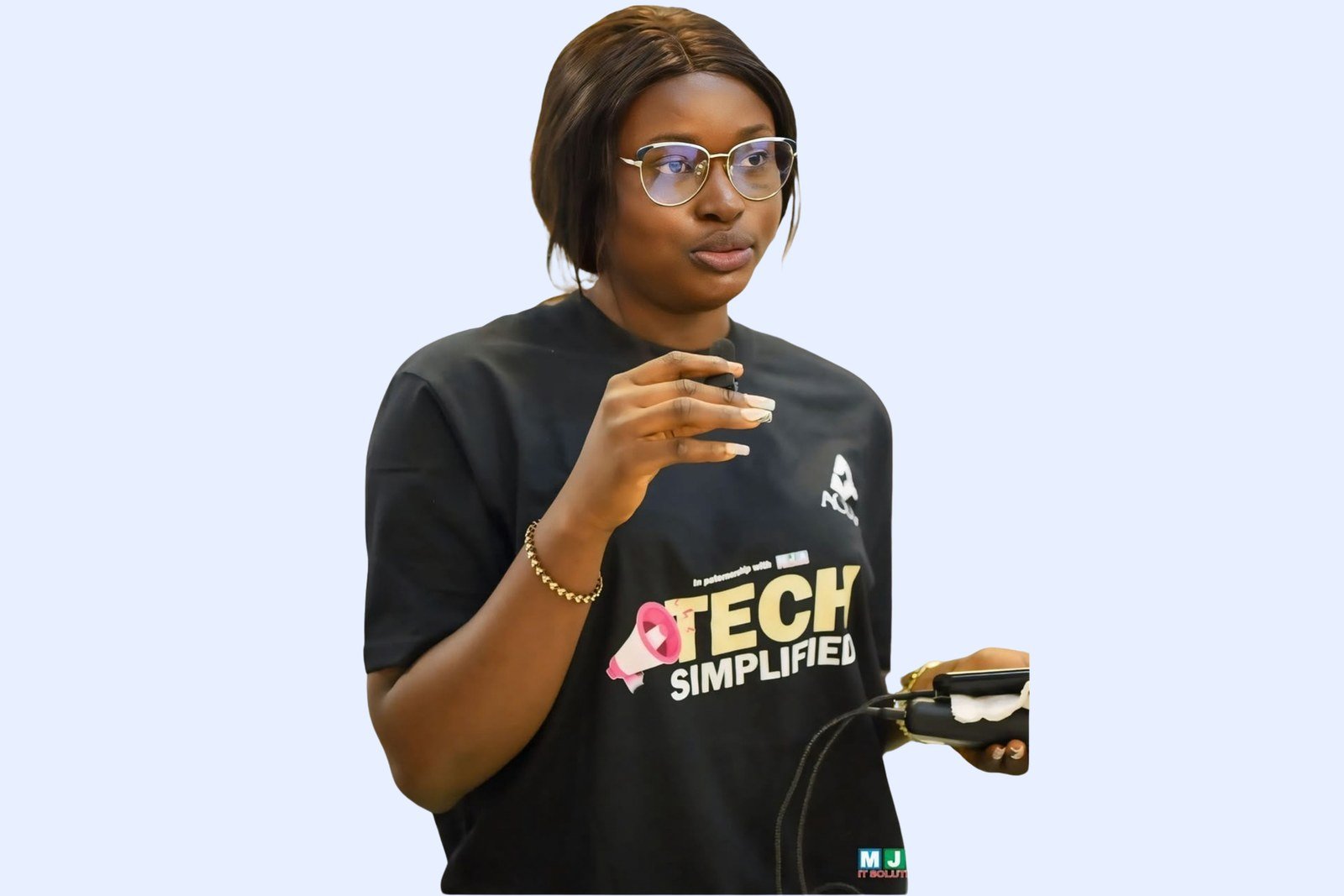


Victor Omoboye is a data scientist and AI governance specialist based in London, United Kingdom. His work sits at the intersection of data science, AI automation, responsible AI and public education. He is a keynote speaker, content creator and community mentor dedicated to making AI accessible, practical and understandable, particularly within the African tech ecosystem.
He holds an MSc in Data Science and brings real-world expertise in AI governance frameworks such as the EU AI Act, the NIST AI Risk Management Framework (AI RMF) and ISO/IEC 42001, alongside hands-on experience building agentic AI systems and retrieval-augmented generation (RAG) pipelines.
What is the future of data and AI in Africa?
The biggest opportunities lie in the challenges Africa has long been solving informally: healthcare access, agricultural productivity, financial inclusion and education. AI now provides the tools to address these issues at scale.
I’m particularly excited by the rise of homegrown AI startups building context-aware solutions for African markets, rather than importing foreign answers to local problems. With a young, dynamic talent pool and some of the world’s most complex data challenges, the continent holds a genuine competitive advantage if this potential is properly harnessed.
How important will local data ownership and regional datasets be in shaping Africa’s AI future?
It will be everything. You cannot build AI that truly serves African communities using datasets built in Silicon Valley. Language, culture, behaviour and context matter deeply in how AI systems perform. Right now, Africa is massively underrepresented in global training data. Whoever owns the data shapes the outcomes.
African nations and organisations need to prioritise building and owning regional datasets, because surrendering that to foreign entities is not just a technical risk; it’s a sovereignty risk.
What breaks first in most AI initiatives: data quality, governance, talent, or leadership expectations?
Honestly, it’s rarely just one thing, but if I had to point to where the first crack appears, it’s almost always the gap between leadership expectations and reality. Leaders see a competitor deploy AI and immediately want the same results, without understanding the foundational work required to get there. That pressure trickles down and forces teams to rush into building models on dirty, ungoverned data, which is where the second failure kicks in.
Talent shortages make it worse, because without the right people to push back and set realistic timelines, everyone just nods along until the project collapses under its own weight.
In my experience, AI doesn’t fail because the technology is flawed. It fails because organisations skip the boring, unglamorous groundwork and expect the tool to compensate for structural gaps it was never designed to fill.
Where do African organisations go wrong when importing AI strategies?
The biggest mistake is transplanting the solution without understanding the context. Organisations in emerging economies look at how the US or Europe is deploying AI and try to copy the output, the tools, the frameworks and the models, without asking whether the underlying conditions match. Advanced economies built those strategies on decades of structured data infrastructure, mature regulatory environments and deep talent pipelines.
When you copy the strategy without the foundations, you’re essentially building on sand.
The second mistake is adopting AI governance frameworks as a compliance checkbox rather than a genuine risk management tool: ticking the box to look internationally credible, without embedding those principles into actual decision-making.
And perhaps most critically, many organisations ignore local context entirely: the data gaps, the language diversity, the digital literacy levels, and the communities most likely to be harmed by biased systems. Responsible AI is not a one-size-fits-all framework, and treating it as such may be the most dangerous mistake of all.
What guiding principle should African organisations and policymakers follow when developing responsible AI?
Don’t let the rush to adopt AI move faster than your ability to govern it. The pressure to keep up with the rest of the world is real; I feel it myself, which is part of why I’m being deliberate about how I launch my own first AI product. But moving fast without the right foundations doesn’t close the gap; it creates new problems on top of old ones.
Responsible AI isn’t a privilege for richer nations. If anything, it matters more in places where institutions are still finding their footing, because one biased or poorly designed system can cause harm at a scale that’s hard to reverse.
Build your governance structures before a crisis makes it urgent. Invest in your own people, your own data, and solutions rooted in your own context, because AI that was built without you in mind will rarely work in your favour. The countries that will shape Africa’s AI future won’t be the ones that moved the quickest. They’ll be the ones that moved with intention.
How important is mentorship in building a sustainable AI career?
It’s not optional; it’s a multiplier. The AI field has so many directions you can go, and without someone who has navigated the lane before you, it’s easy to waste years moving in the wrong direction. A good mentor doesn’t just open doors; they help you avoid the mistakes that aren’t written in any textbook.
I’ve seen first-hand, both as a mentee and as someone who now mentors others through platforms like CodeYourFuture, that the people who grow fastest aren’t always the most talented; they’re the most coachable. Invest in finding mentors, and equally, invest in becoming one. That cycle of giving back is what makes a career truly sustainable.
As a founder and trainer, how do you balance technical expertise with leadership?
I stopped trying to be the smartest person in the room and started focusing on being the most useful one. Technical depth gives you credibility, but leadership is about translating that depth into clarity for others, whether that’s a boardroom, a classroom or a content platform.
The balance for me comes from staying curious technically while always asking, “Who does this serve, and how do I communicate it?” You lose people the moment you lead with jargon instead of impact.
What advice would you give young professionals entering the AI ecosystem today?
Stop waiting until you feel ready, because you will never be ready. The AI space moves too fast for perfection paralysis. Pick a lane, whether that’s governance, automation, engineering, data or ethics, and go deep rather than trying to know everything.
Build in public: document your learning, share your projects, and grow your network before you think you need it. But most importantly, don’t just learn how to build AI; learn how to question it. The professionals who will thrive long-term aren’t just the ones who can deploy models; they’re the ones who understand the risks, the limitations and the responsibility that comes with the technology.
About The AI Compass
The AI Compass began as a simple idea: be the guide Victor wished existed when he was trying to make sense of the AI world. What started as a personal initiative has grown into a fast-growing platform serving AI and data professionals, business leaders and curious learners who want to stay ahead without getting lost in jargon or hype. With over 4,000 newsletter subscribers and an expanding community across LinkedIn, YouTube and other platforms, the vision is to build it into a trusted hub for AI news, emerging trends, consulting and governance insights.